Ma An Shan Shi Bo Da Jing Shen Machinery Co.,ltd

Ma An Shan Shi Bo Da Jing Shen Machinery Co.,ltd

Function and Operational Value of Feed Hopper for Mining Crushers

2026 05/11

default name

In the complex and demanding ecosystem of mineral processing, the feed hopper stands as the critical first interface between raw mined material and the crushing circuit, serving as the foundational component that bridges material extraction and size reduction operations. Specifically engineered for the rigorous conditions of mining environments, this specialized equipment is far more than a simple container for raw ore: it is a precision-designed system that regulates material flow, protects downstream machinery, optimizes crushing efficiency, and enhances overall operational reliability. For mining operations ranging from open-pit hard rock quarries to underground mineral extraction sites, the crusher feed hopper is an indispensable asset that directly impacts throughput, equipment lifespan, maintenance costs, and the consistency of final product output. This comprehensive overview delves into the core functions, multi-faceted operational purposes, and strategic value of the feed hopper in modern mining crushing systems.

Core Functional Design of the Mining Crusher Feed Hopper

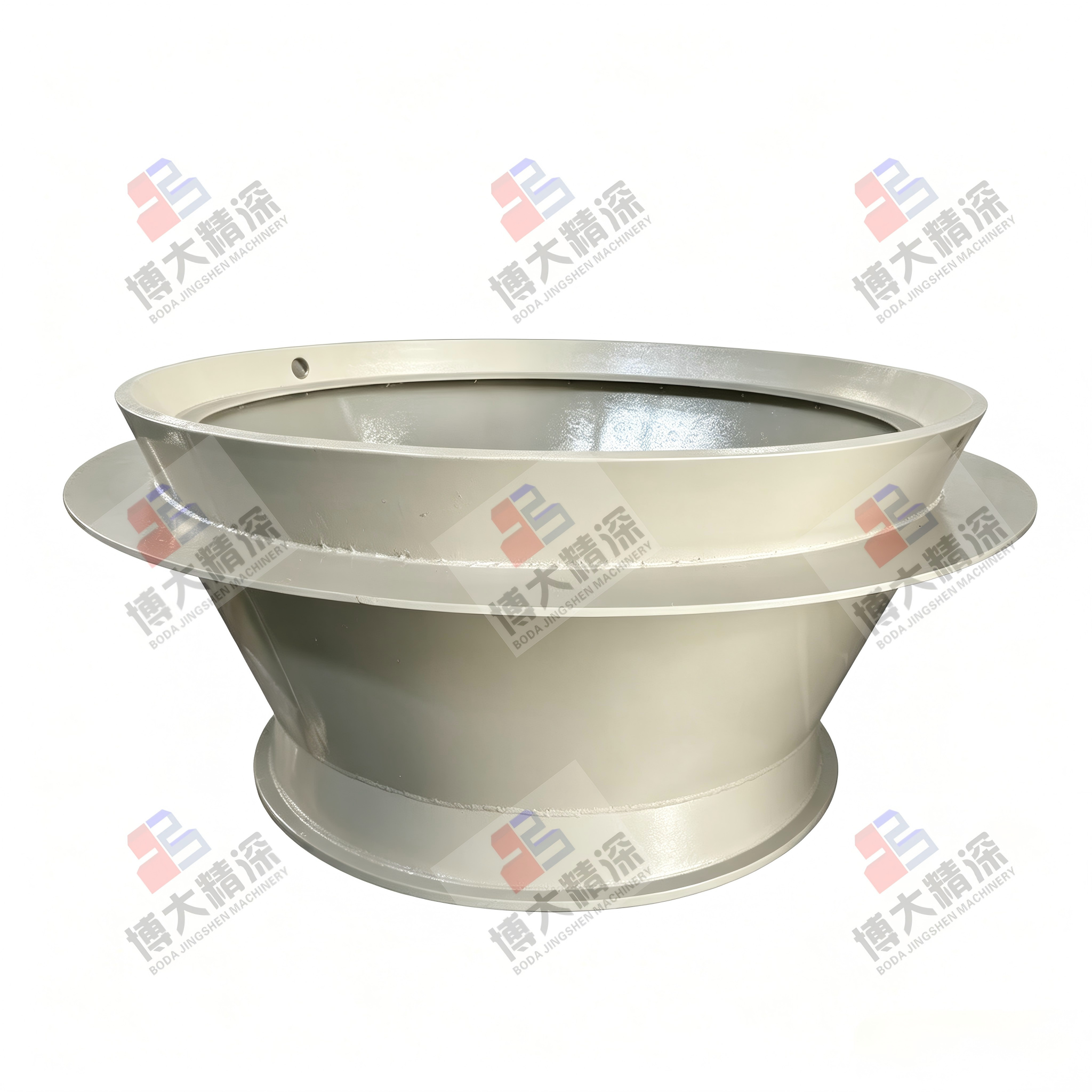
At its core, the mining crusher feed hopper is a purpose-built material handling component, typically constructed from high-grade wear-resistant steel (often reinforced with manganese steel liners, hardened steel alloys, or rubber lining for extreme abrasion resistance) to withstand the constant impact, friction, and heavy loads of raw mined material. Its conical or flared structural design—wider at the top opening and tapered toward the bottom discharge port—serves as the physical foundation for its functional performance, enabling controlled material transfer while minimizing the risk of blockages and uneven loading.

The primary functional role of the feed hopper is to act as a controlled material distribution and regulation system for the crusher. Unlike generic material chutes, it is engineered to receive irregular, large-volume batches of raw ore from upstream equipment such as haul trucks, loaders, apron feeders, or conveyor belts, and convert these intermittent, high-volume material dumps into a consistent, uniform flow that matches the crusher’s optimal feed rate. This flow regulation function is critical: every crusher model—whether a jaw crusher, cone crusher, impact crusher, or gyratory crusher—has a strict operating window for feed volume, particle size distribution, and feed consistency. When material is fed too quickly, the crusher becomes overloaded, leading to increased power draw, reduced crushing efficiency, and potential mechanical jamming. When fed too slowly, the crusher operates below its rated capacity, wasting energy and reducing overall plant throughput. The feed hopper acts as a buffer, absorbing the surge of material from upstream delivery equipment and releasing it at a steady, calibrated rate that keeps the crusher operating at peak efficiency.

Beyond flow regulation, the feed hopper fulfills a critical protective function for the entire crushing circuit. Raw mined material often contains oversized rocks, tramp metal (such as excavator teeth, drill bits, or broken machinery parts), and other uncrushable debris that can cause catastrophic damage to crusher components. The hopper’s design, often integrated with grizzly bars, screening decks, or magnetic separators at its discharge opening, acts as a first line of defense: it screens out oversized material that cannot pass into the crusher, traps tramp metal before it reaches the crushing chamber, and prevents sudden, high-impact loads from striking the crusher’s feed opening. Many heavy-duty mining hoppers also incorporate impact plates at the point where haul trucks dump material, absorbing the enormous kinetic energy of falling ore and preventing that force from transferring directly to the crusher’s frame and internal components. This protective function directly reduces unplanned downtime, as it prevents costly damage to crusher wear parts, bearings, and drive systems that would otherwise require emergency maintenance.

Another key functional capability of the modern mining feed hopper is its material homogenization and segregation control. Raw mined material is rarely uniform: it varies in particle size, moisture content, hardness, and density from one batch to the next. Without a hopper to buffer this material, these variations would cause the crusher to operate under constantly changing conditions, leading to inconsistent product size, fluctuating power consumption, and uneven wear on crusher liners. The hopper’s storage volume allows it to blend material from multiple dumps, creating a more consistent feed stream for the crusher. Additionally, its tapered design minimizes material segregation—where fine particles settle at the bottom of the hopper and coarse particles rise to the top—ensuring that the material entering the crusher has a consistent particle size distribution, which is essential for stable crushing performance and uniform final product quality.

Many advanced mining feed hoppers also integrate auxiliary functional systems to enhance their performance in harsh operating conditions. These include vibratory feeders mounted at the hopper discharge to actively control material flow, level sensors that monitor hopper fill volume and adjust upstream material delivery automatically, dust suppression systems that capture airborne particles during material dumping, and heating elements for cold-climate operations to prevent material from freezing and blocking the hopper. These integrated functions transform the hopper from a passive material container into an active, intelligent component of the automated crushing circuit.

Operational Purposes of the Crusher Feed Hopper in Mining Applications

The functional capabilities of the feed hopper translate directly to a wide range of operational purposes that drive value for mining operations, spanning efficiency, safety, cost management, and process optimization.

First and foremost, the feed hopper exists to maximize the throughput and productivity of the crushing circuit. Every mining operation’s profitability depends on its ability to process as much ore as possible at the lowest possible cost per ton. By ensuring the crusher operates at its optimal feed rate 24/7, the hopper eliminates the two most common causes of reduced crusher throughput: overloading and underfeeding. For example, a gyratory crusher in a large-scale open-pit mine can process thousands of tons of ore per hour when fed consistently, but its throughput can drop by 30% or more when subjected to uneven feeding. The hopper’s surge capacity allows haul trucks to dump material rapidly without waiting for the crusher to be ready, eliminating bottlenecks at the crushing station and allowing the entire material delivery fleet to operate at full capacity. This means more tons of ore processed per hour, higher overall plant output, and increased revenue for the mining operation.

A second core purpose is to extend the service life of critical equipment and reduce maintenance costs. Mining crushers represent a massive capital investment, with high-value wear parts (such as jaw plates, cone liners, and impact blow bars) that require regular replacement. The feed hopper directly reduces the wear and tear on these components by ensuring even, consistent loading. When a crusher is fed unevenly, one side of the crushing chamber receives more material than the other, leading to uneven liner wear that requires premature replacement. A consistent feed stream distributes wear evenly across all crusher components, extending the lifespan of wear parts by up to 20% in many cases. Additionally, the hopper’s ability to block tramp metal and oversized material prevents catastrophic damage that can destroy crusher components in an instant—damage that can cost tens of thousands of dollars in parts and weeks of downtime to repair. By reducing the frequency of both routine and emergency maintenance, the hopper lowers the total cost of ownership for the crushing circuit and increases the overall availability of the equipment.

Safety is another critical purpose served by the mining crusher feed hopper. Mining operations are inherently hazardous, and the area around the crusher feed opening is one of the most dangerous zones in the processing plant. Without a properly designed hopper, workers would be required to be in close proximity to the crusher to clear blockages, manually feed material, or remove trapped debris, exposing them to the risk of falling rocks, flying material, or entanglement with moving crusher components. The hopper’s elevated design, integrated safety grates, and remote-controlled flow regulation reduce the need for workers to enter this high-risk zone, minimizing the potential for workplace accidents. Many hoppers also incorporate safety features such as emergency stop sensors, blockage detection systems, and access platforms with guardrails, further enhancing workplace safety around the crushing circuit. Additionally, the hopper’s dust suppression capabilities reduce airborne particulate matter, improving air quality for workers and reducing the risk of respiratory health issues.

The feed hopper also serves the critical purpose of enabling flexible and adaptable operation for changing mining conditions. Mining operations rarely operate under static conditions: the hardness of the ore can change as the mine advances, the production target can be increased or decreased, and the upstream material delivery equipment can change over time. The hopper’s adjustable design—with customizable discharge sizes, interchangeable liners, and adjustable flow control systems—allows the crushing circuit to adapt to these changes without requiring a complete equipment overhaul. For example, if a mine begins processing harder ore that requires a slower feed rate, the hopper’s vibratory feeder can be adjusted to reduce the material flow to the crusher. If the mine increases its production capacity by adding more haul trucks, the hopper’s larger surge volume can accommodate the increased material delivery. This flexibility ensures that the crushing circuit can evolve with the mine’s operational needs, maximizing the return on investment over the equipment’s service life.

Finally, the feed hopper plays a key role in improving the consistency and quality of the final crushed product. In most mining operations, the crushed ore is fed to downstream processing equipment such as grinding mills, screening plants, or separation systems, which require a consistent feed size to operate efficiently. When the crusher is fed inconsistently, the size of the crushed product fluctuates widely, leading to reduced efficiency in downstream processes, higher energy consumption, and lower recovery rates of valuable minerals. By ensuring a consistent, uniform feed to the crusher, the hopper enables the crusher to produce a more consistent product size, which improves the performance of the entire processing plant. For operations that produce aggregate material for construction, consistent product size is critical for meeting customer specifications, and the feed hopper is a key component in achieving that consistency.

Conclusion

In the demanding world of mineral processing, the crusher feed hopper is far more than a passive material holding device: it is a strategically critical component that forms the backbone of efficient, reliable, and profitable crushing operations. From its core functions of flow regulation, equipment protection, and material homogenization to its operational purposes of maximizing throughput, reducing maintenance costs, enhancing safety, and ensuring product quality, the feed hopper touches every aspect of the mining crushing circuit. For mining operations of all sizes, investing in a high-quality, purpose-built feed hopper is not just an operational necessity—it is a strategic decision that drives long-term value, protects critical equipment, and ensures the consistent performance of the entire processing plant. As mining operations continue to push for higher efficiency, lower costs, and safer working conditions, the role of the crusher feed hopper will only grow in importance, remaining an indispensable component of modern mineral processing for years to come.