
Functions and Working Principle of Feed Plate in Mining Crushers
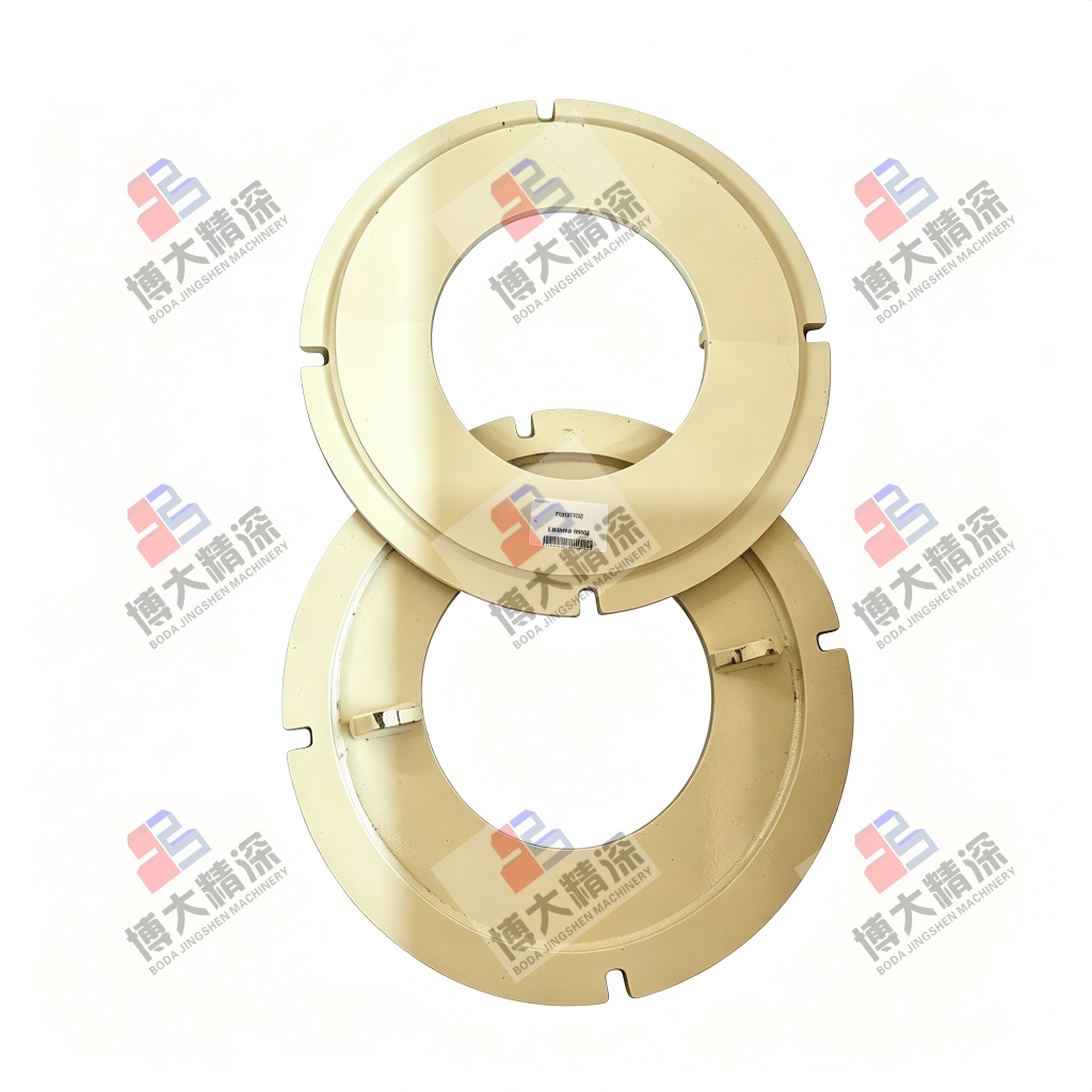
Manufactured primarily from high-manganese steel, high-chromium alloy steel or composite wear-resistant steel, the feed plate features a thickened plate body and specially designed curved or inclined surfaces. Its surface is often reinforced with raised anti-slip ribs or wear-resistant layers to enhance durability. Different from common structural steel parts, it is engineered to resist strong impact and abrasive wear, two dominant forces in mine production. It is fixed by bolts or welding inside the feed hopper and the front end of the crushing cavity, forming a complete material conveying channel together with the hopper. Due to direct contact with raw ores of varying sizes, hardness and shapes, the feed plate is classified as a standard consumable wear part, which is regularly inspected and replaced during daily equipment maintenance.
The most fundamental function of the feed plate is material guidance and flow control. Raw ores transported by trucks or conveyors fall into the crusher’s feeding area from a high position. Without effective guidance, materials will scatter randomly, cause feeding blockage or uneven material distribution inside the crushing chamber. The inclined and curved surface of the feed plate changes the falling direction of bulk ores, smoothly diverting all materials toward the center of the crushing chamber. Meanwhile, its surface structure adjusts the material falling speed: it buffers the rapid descent of large and heavy rocks to avoid instantaneous material surges, and ensures ores enter the crushing area at a steady and uniform rate. Uniform feeding prevents the crusher from running under intermittent overload, stabilizes operating load, and further improves overall crushing capacity and finished product granularity consistency.
Impact resistance and equipment protection are another core value of the feed plate. When massive raw ores drop from a height, they generate tremendous kinetic energy and strong impact force. If ores directly strike the crusher’s cast iron frame, hopper shell and connecting brackets, long-term impact will lead to metal fatigue, deformation, cracking and even structural failure. As the first contact part for incoming materials, the feed plate bears almost all direct impact and friction. It acts as a protective barrier, isolating harsh abrasion and impact from the crusher’s expensive main structure. Since the feed plate is a low-cost and easy-to-replace component, replacing it regularly can effectively extend the service life of the crusher body and reduce major repair costs and unexpected downtime on mining sites.
In addition, the feed plate effectively prevents material splashing and dust overflow. During the feeding process, falling ores often bounce and splash outward due to collision, which not only causes material loss but also poses safety hazards to nearby operators. The surrounding baffle structure of the feed plate limits the moving range of bounced ores, keeping all materials within the designated feeding channel. In open-air mining environments, a large amount of dust is produced when ores collide and rub against each other. The enclosed guiding structure of the feed plate constrains dust diffusion, lowering dust pollution on the work site and improving the operating environment. For mobile crushers working in complex field conditions, this function is particularly important for standardizing on-site management and ensuring production safety.
The working principle of the feed plate is based on physical buffering, force decomposition and directional material conveying, which runs through the entire feeding process. When raw materials are unloaded into the crusher hopper, ores first land on the surface of the feed plate. The inclined design decomposes the vertical impact force into downward sliding force and partial horizontal force, greatly weakening the destructive force of vertical impact. Large, medium and small ores slide along the curved surface of the feed plate under gravity, and the internal raised lines slow down the sliding speed appropriately, so that materials enter the crushing chamber in a continuous and orderly stream, instead of pouring in batches.
During continuous operation, the feed plate keeps in constant friction and collision with flowing ores. The high-hardness wear-resistant material resists abrasive wear from mineral particles, maintaining stable structural shape for a long time. Even if local wear appears after long-term use, it only affects the plate itself, without damaging the matched equipment structure. Once the wear exceeds the allowable limit, workers can remove the old plate and install a new one quickly. After replacement, the feeding performance and protective ability of the crusher can be fully restored.
To conclude, the feed plate is a simple but irreplaceable component in crusher feeding systems. It integrates material guiding, impact buffering, equipment protection, splash prevention and dust control into one part. Relying on mechanical force decomposition and wear-resistant structural design, it adapts to the severe working conditions of mining crushing. Proper selection of high-quality feed plates and timely replacement of worn parts can keep the feeding system smooth, reduce equipment failure risks, cut maintenance expenses, and lay a solid foundation for long-term stable and efficient production of mineral processing lines.